
How to Study the Bible for Beginners: Tools and Tips for Making Sense of Scripture
You want to read your Bible—you really do. But every time you open it, you feel lost. You’re not sure where to start, how to make sense of what you’re reading, or how ancient words connect to your actual life.
Maybe you’ve tried reading from Genesis and got stuck somewhere in Leviticus. Or you downloaded a reading plan that felt too fast, too confusing, or just… too much.
Here’s what I want you to know: You’re not behind, and you don’t need a theology degree to understand God’s Word.
The Bible wasn’t written just for pastors or biblical scholars—it was written for you. For the woman juggling work and relationships. For the mom trying to figure out faith while raising kids. For anyone who wants to know God better but isn’t sure where to begin.
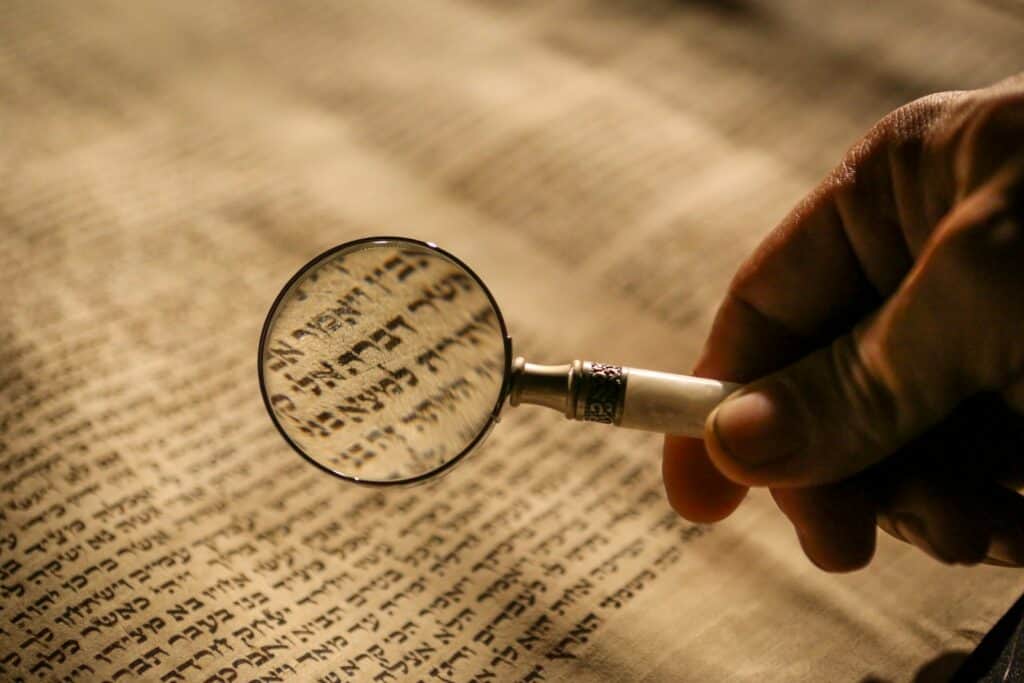
If you’ve ever felt confused by the language, overwhelmed by where to start, or guilty for not understanding more—you’re not alone. The existence of many different Bible translations, the ancient cultural context, and the sheer size of Scripture can make things challenging for beginners.
Today, I’m sharing the tools and tips that helped me go from feeling overwhelmed to actually understanding what I was reading. These are practical, beginner-friendly approaches that work for your actual life—not some ideal version of it.
Why Bible Study Feels So Hard (And Why That’s Normal)
You Were Never Taught How (And That’s Not Your Fault)
Here’s something that took me years to realize: most of us were never actually taught how to study the Bible.
We were told we should read it. We heard it’s important. We knew “good Christians” spend time in God’s Word. But no one ever sat us down and said, “Here’s how you actually do this. Here’s where to start. Here’s what to do when you don’t understand.”
And that gap? It’s not your failure—it’s just a missing piece. One we’re going to fill in together today.
What Makes the Bible Feel Complicated
The Bible isn’t one book—it’s a library of 66 books written over approximately 1,500 years by around 40 different authors across three continents. It contains history, poetry, letters, prophecy, law, and more. The Bible is divided into the Old Testament (39 books) and New Testament (27 books), each with its own context and themes that are important to understand for deeper study.
Of course it takes some learning to navigate! You wouldn’t walk into a library and expect to instantly understand every book on every shelf. The Bible works the same way.
When you understand that you’re not reading a single book but exploring an entire collection written across centuries in different cultures and languages, it makes sense why jumping in without guidance feels overwhelming.

Here’s the Truth That Changes Everything: God Wants You to Understand
This is the part that changed everything for me.
God isn’t hiding from you. He’s not keeping His truth locked away for only the “spiritual elite.” He’s not rolling His eyes at your confusion or disappointed that you don’t understand more by now.
Look at what James—Jesus’s own brother who led the early church—wrote in James 1:5: “If any of you lacks wisdom, you should ask God, who gives generously to all without finding fault, and it will be given to you.”
Did you catch those key words? He gives wisdom generously—meaning abundantly, freely, without holding back. And without finding fault—meaning He’s not annoyed by your questions or frustrated by how little you know. He’s inviting you to come and learn.
Psalm 119:105 calls God’s Word “a lamp for my feet, a light on my path.” It’s meant to illuminate your way forward, not confuse you or leave you in the dark. And 2 Timothy 3:16-17 tells us that all Scripture is “God-breathed and is useful for teaching, rebuking, correcting and training in righteousness, so that the servant of God may be thoroughly equipped for every good work.”
Useful. Equipping. For you.
The Bible is meant to be understood, applied, and lived—not locked away for experts. Engaging with God’s Word is essential for spiritual growth and transformation. It helps us deepen our relationship with Him and allows His truth to shape our lives.
Getting Ready to Study (Without the Pressure)
You Don’t Need a Perfect Setup
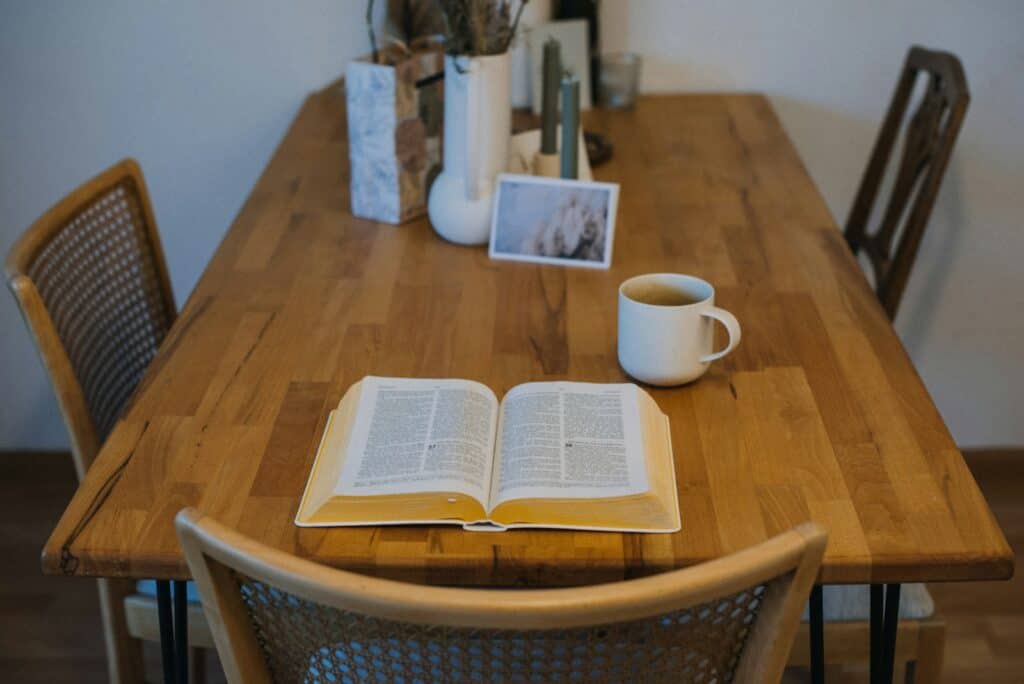
Can I be honest about something? For the first year I tried to study the Bible consistently, I thought I needed the perfect setup. You know—the aesthetic coffee mug, the color-coded highlighters, the Pinterest-worthy journal, the quiet house at 5am.
Reality? Most days I’m at my kitchen table with lukewarm coffee and my phone buzzing with notifications. Sometimes the kids are asking for snacks. Sometimes I’m squeezing in five minutes before work. And you know what? That counts just as much.
Here’s what I’ve learned: God doesn’t need your environment to be perfect. He just wants you to show up.
What Actually Helps (When It’s Realistic)
That said, there are a few simple things that genuinely do help—not because they’re required, but because they make it easier to focus when life is already pulling you in seventeen directions.
Find your spot. Not your perfect spot—just a spot. Maybe it’s your bed with pillows propped up. Maybe it’s the couch before everyone else wakes up. Maybe it’s your car during lunch break. I’ve had meaningful time with God in all these places.
Keep it simple. Have your Bible (phone app totally counts), something to write with if that helps you think, and maybe a notebook. That’s it. You don’t need a home library to meet with God.
Give yourself what you need to focus. For me, that’s silence. For you, it might be soft worship music. There’s no right answer—just what helps you actually engage with what you’re reading.
The goal isn’t creating an Instagram-worthy Bible study corner. The goal is removing enough distractions that you can actually hear God speak through His Word.
What This Looks Like Across Different Seasons
If you’re in college or early career:
Your “spot” might change daily—dorm room, library, coffee shop between classes. That’s okay. God isn’t tied to a location. I studied the Bible in my college library, at Starbucks, and sitting on the quad between classes. Wherever you are, He’s there too.
If life is full and busy:
Your Bible study might happen in stolen moments—10 minutes before bed, your lunch break at work, Sunday afternoon when you finally have a minute. Don’t guilt yourself for not having the perfect morning routine. Meet God when you can, where you can.
If you have young kids:
Your Bible might share table space with Cheerios and coloring books. You might get interrupted five times in five minutes. Read a verse, help someone find their shoes, come back and read it again. That counts. God meets you in the chaos.
Actually Preparing Your Heart (Not Just Going Through Motions)
Here’s something that changed Bible study for me: realizing it’s not about completing a task, it’s about connecting with a Person.
Before you start reading, take a genuinely honest moment with God. Not a pretty prayer—a real one.
Some days mine sounds like:
“God, I’m really distracted today. My mind is everywhere. Help me focus on You for just these few minutes.”
Other days:
“I don’t even know what I’m looking for here, but I need something from You. Help me see it.”
Hard days:
“I’m only doing this because I know I should. I don’t feel anything right now. But I’m here. Please meet me anyway.”
God can work with honest. He can’t work with pretending.
Psalm 139:23-24 invites this kind of honesty: “Search me, God, and know my heart; test me and know my anxious thoughts. See if there is any offensive way in me, and lead me in the way everlasting.” David—who wrote this—is essentially saying, “God, I’m bringing You everything. The good, the bad, the messy. Show me what I need to see.”
That’s the heart posture that opens you up to actually hearing God, not just reading words on a page.
The Prayer That Actually Matters
Want to know the prayer I pray before almost every Bible study session?
“God, help me understand this. Help me see how it connects to my actual life. And help me actually do something with what I learn.”
That’s it. No fancy language. No theological terms. Just honest need.
Sometimes I pray the words of Psalm 119:18: “Open my eyes that I may see wonderful things in your law.” The psalmist knew he needed God’s help to really see what was there. So do we.
And here’s the grace in this: even when you forget to pray, even when you jump straight into reading because you only have five minutes, God still shows up. Your connection with Him isn’t dependent on doing everything perfectly. It’s dependent on His faithfulness—and that never wavers.
When It Doesn’t Feel Spiritual Enough
Some days you’ll sit down, pray, feel God’s presence, and have incredible insights. Those days are beautiful.
Other days? You’ll read, feel nothing, understand little, and wonder if you’re doing it wrong.
Both count. Both matter. Both are part of growing in faith.
Jesus promised in Matthew 7:7-8, “Ask and it will be given to you; seek and you will find; knock and the door will be opened to you. For everyone who asks receives; the one who seeks finds; and to the one who knocks, the door will be opened.”
Everyone. Not just people who do it perfectly. Not just people who feel something profound every time. Everyone who shows up, seeking Him.
You’re preparing your heart simply by showing up and saying, “God, I’m here. I want to know You better.”
That’s enough.
Start Where You Are (Because That’s Where God Meets You)
So forget the pressure to create the perfect study environment. Forget needing to feel a certain way before you begin.
Find a spot that works. Bring your honest heart—anxious thoughts, distracted mind, doubts and all. Ask God to help you understand. Then open your Bible and start reading.
Grace meets you here. Right where you are. In whatever environment you have. With whatever preparation you managed.
One verse. One honest prayer. One step forward.
That’s how faith grows—not in perfect conditions, but in showing up anyway.
Start With the Right Expectations (Not Perfection)
What Bible Study Actually Looks Like for Beginners
Can I let you in on something? When I first started studying the Bible, I thought “Bible study” meant reading for hours, having deep theological insights, and writing pages of profound reflections.
That’s not what most days look like. Not for me, and probably not for you either.
Let me reframe what “counts” as Bible study:
- Reading one verse slowly counts
- Reading without feeling something profound counts
- Five minutes counts
- Coming back after months away counts
- Asking questions you can’t answer yet counts
- Not understanding everything counts
Environments like church small groups or Sunday School can provide structured opportunities for beginners to learn and grow in their understanding of Scripture alongside others. But your personal time with God—however imperfect—counts just as much.
Jesus said in Matthew 11:28-30, “Come to me, all you who are weary and burdened, and I will give you rest. Take my yoke upon you and learn from me, for I am gentle and humble in heart… For my yoke is easy and my burden is light.”
Bible study is about relationship, not religious performance. It’s meant to give you rest, not add to your burden.
Give Yourself Permission to Start Small
Here’s what I wish someone had told me: Some days you’ll have insights that take your breath away. Some days you’ll just read words on a page and feel nothing special.
Both are valuable. Both count. Both matter.
As you begin, make it a habit to read Scripture slowly and thoughtfully. Consider keeping a journal or taking notes during your study to help retain what you learn and reflect on your observations. But don’t let those things become requirements—they’re just tools that might help.
Psalm 34:8 invites us to “taste and see that the Lord is good.” It’s an invitation to experience—not an expectation to perform perfectly.
You Don’t Have to Read Genesis to Revelation (Really)
Here’s Permission You Didn’t Know You Needed
Most beginners don’t realize this: you don’t have to read the Bible in order. In fact, most people who try to read straight through get stuck around Exodus or Leviticus and give up entirely.
I did this three times before someone finally told me I could start somewhere else.
The Bible isn’t structured like a novel with a beginning, middle, and end that must be read sequentially. It’s more like a collection—think of it as 66 separate books organized by type and theme, not necessarily by the order you need to read them.
You have permission to start wherever makes sense for where you are right now.
As you study, always look forward to the next chapter—both in your reading and in your spiritual growth—seeking deeper understanding and a closer relationship with God.
The Best Places to Start Reading (Beginner-Friendly Books)
Where NOT to Start (Learn From My Mistakes)
Before I tell you where to begin, let me save you some frustration by sharing where not to start:
Genesis – Starts accessible with creation and the early stories, but gets difficult quickly when you hit genealogies and complex narratives
Revelation – Full of symbolism and apocalyptic imagery that requires significant context to understand
Leviticus – Ceremonial laws and priestly instructions that confuse most beginners (and honestly, even people who’ve been reading the Bible for years)
These books are valuable—but they often require a deeper understanding of the context surrounding each passage. Always consider the context by examining surrounding verses and chapters to avoid misinterpretation. But as a beginner, starting here often leads to giving up.
The 5 Best Books for Bible Study Beginners
1. The Gospel of John
This is my number one recommendation for beginners, and it’s where I started when I was first trying to understand who Jesus really was.
John shows us who Jesus is, what He said, and why He came. John 20:31 tells us exactly why it was written: “that you may believe that Jesus is the Messiah, the Son of God, and that by believing you may have life in his name.”
It’s clear, focused on Jesus’s teachings and miracles, and immediately applicable to understanding your faith. Start here. Read it all the way through before moving to anything else.
2. Psalms
These are honest prayers that teach us how to talk to God—including when we’re angry, sad, confused, or overjoyed. They normalize bringing our real emotions to God.
I learned how to pray authentically by reading the Psalms. David and the other psalmists didn’t clean up their feelings before bringing them to God—they brought everything. Raw grief. Desperate fear. Overwhelming joy. Deep confusion.
You can read one Psalm a day, or pick ones that match what you’re feeling. Look for Psalm 23 (comfort), Psalm 139 (God’s intimate knowledge of you), or Psalm 46 (peace in chaos).
3. Proverbs
Practical wisdom for daily life. There are 31 chapters, so you can read one chapter that corresponds to each day of the month.
When I was trying to figure out how faith applied to actual decisions—relationships, work, money, words—Proverbs gave me concrete wisdom. It’s not just inspirational; it’s genuinely practical.
4. James
A short, practical book about faith in action. It’s only five chapters and incredibly applicable to everyday life.
James—Jesus’s brother—writes to Christians scattered across the region, dealing with real-life struggles like favoritism, controlling our words, living out our faith practically, and trusting God through trials. It’s straightforward and actionable.
5. Philippians
Short, encouraging, and focused on finding joy even in hard times. You can read the whole book in one sitting (it’s only four chapters).
Paul wrote this from prison, yet it’s one of the most joy-filled books in the New Testament. When life feels hard, Philippians reminds you that your circumstances don’t determine your peace.
Pro tip from experience:
Pick one book and read it all the way through before jumping around. This helps you understand context and flow. As you read, notice cross-references in your Bible—these point you to related verses in other parts of Scripture and help you see how themes connect throughout the Bible.
When I first started, I read John three times before moving on. That repetition helped truths sink in and gave me a foundation for understanding everything else.
Simple Bible Study Methods That Actually Work
When learning how to study the Bible for beginners, having a simple method makes all the difference. Without some kind of framework, you can read a passage and walk away thinking, “Okay, that was nice,” but not really knowing what to do with it.
Trying different study methods can help you find what works best for you and enable deeper study of Scripture. Here are four approaches—pick one and stick with it for at least a month. Don’t method-hop. Give one a real chance before switching.
Method 1: Read, Reflect, Respond
This is the simplest approach and perfect for complete beginners. It’s where I started, and honestly, it’s still what I use on busy days.
Read the passage slowly (maybe twice)
Don’t rush. Read it once to see what it says, then read it again to notice details you missed.
Reflect: Ask yourself three questions
- What does this tell me about God?
- What does this tell me about people (or myself)?
- What is one thing that stands out?
Respond: Talk to God about what you read (even just one sentence)
This is where reading becomes relationship. Tell God what you noticed, ask Him questions, thank Him for something you learned.
What this looks like in real life:
Let’s say you read Philippians 4:6-7: “Do not be anxious about anything, but in every situation, by prayer and petition, with thanksgiving, present your requests to God. And the peace of God, which transcends all understanding, will guard your hearts and your minds in Christ Jesus.”
Read: You read it twice, noticing the words “do not be anxious about anything.”
Reflect:
- About God: He cares about my anxiety and wants me to bring it to Him
- About me: I try to handle anxiety alone instead of praying
- What stands out: “Peace that transcends understanding”—I don’t have to understand how to have peace
Respond: “God, I’m anxious about [specific situation]. I’m bringing it to You. Help me trust You with this.”
That’s it. Simple, sustainable, and effective.
Method 2: The SOAP Method
This structured approach is popular because it works well for journaling. If you process things by writing, this might be your method.
Scripture: Write out the verse
Actually writing it down (or typing it) helps you slow down and notice words you’d otherwise skim.
Observation: What do you notice?
Who’s speaking? Who’s the audience? What’s the context? What words or phrases stand out? What’s the main point?
Application: How does this apply to your life?
This is where Bible study becomes personal. What does this mean for how you live today?
Prayer: Pray about what you learned
Ask God to help you live out what you just learned. Thank Him for what He showed you.
Real example:
Scripture: “Trust in the Lord with all your heart and lean not on your own understanding” (Proverbs 3:5)
Observation: This is wisdom literature written to teach people how to live. The command is to trust God completely (“all your heart”), not just partially. The contrast is trusting Him versus relying on my own understanding.
Application: I’m facing [decision] and trying to figure it out on my own. This verse reminds me to bring it to God first instead of exhausting myself trying to understand everything before trusting Him.
Prayer: “God, I confess I try to figure everything out before I trust You. Help me trust You even when I don’t understand the path forward. Thank You that I don’t have to have all the answers—You do.”
Method 3: Ask Three Questions
This method helps you move from surface reading to deeper understanding.
Question 1: What does this passage say?
What’s actually happening? What are the facts? Who’s involved?
Question 2: What does this passage mean?
What was the original intent? What was the author communicating to the original audience? When asking what a passage means, try to uncover its intended meaning by considering the original audience, historical context, and, if possible, the original language. This helps you go beyond a surface reading and better understand what the author wanted to communicate.
Question 3: What does this passage mean for me?
How do I live this out? What does this change about how I think or act?
Real example:
Reading Matthew 6:25-27 (Jesus teaching about worry)
What does it say?
Jesus tells His disciples not to worry about food, drink, or clothing. He points to birds and flowers as examples of God’s care. He asks, “Can any one of you by worrying add a single hour to your life?”
What does it mean?
Jesus was teaching people who lived in an agrarian society with real daily concerns about survival. He’s not saying don’t be responsible—He’s saying don’t let anxiety consume you because God, who cares for birds and flowers, certainly cares for you. Worry doesn’t change outcomes; it only steals peace.
What does it mean for me?
I worry about [specific area]. This passage reminds me that worry doesn’t add anything productive to my life—it just robs me of peace today. God cares about my needs. I can bring my concerns to Him and trust Him instead of letting anxiety control me.
Method 4: One Verse Deep Dive
Pick one verse and spend your whole time just on that. This is perfect for busy days when you only have five minutes, or when you want to really sit with something profound.
Read it in different translations. Comparing various Bible translations can provide clarity and a deeper understanding of the verse. Modern translations, especially the NLT and NIV, are recommended for their readability and are particularly helpful for beginners.
Ask: What is God saying here? What does each part mean? How does this apply to my life right now?
Example:
Verse: “The Lord is my shepherd, I lack nothing” (Psalm 23:1)
Read it in ESV: “The Lord is my shepherd; I shall not want.”
Read it in NLT: “The Lord is my shepherd; I have all that I need.”
Sit with it:
- God is described as a shepherd—someone who guides, protects, provides, knows His sheep intimately
- “My” shepherd—personal relationship, not distant
- “I lack nothing” / “I shall not want” / “I have all that I need”—this speaks to contentment, trust, His provision
Apply it: I often feel like I’m lacking—lacking direction, lacking resources, lacking peace. But if God is my shepherd, then I have what I need. Not necessarily what I want, but what I truly need. He’s guiding me even when I can’t see the full path.
What to Do When Methods Don’t Work Perfectly
Here’s the grace you need to hear: some days, these methods will flow naturally. Other days, you’ll sit down to do SOAP and end up just reading and praying a quick sentence.
That’s okay. The method is a tool to help you engage—not a rule you have to follow perfectly.
Use methods as training wheels until engaging with Scripture becomes more natural. Then adapt them to fit your life and your needs.
Psalm 119:18 is a beautiful prayer before any method: “Open my eyes that I may see wonderful things in your law.”
Key principle: Pick ONE method and stick with it for at least a month. Don’t method-hop.
Consistency with one approach will serve you better than jumping between five different methods.
Essential Tools for Bible Study Beginners
What You Actually Need (Just One Thing)
Here’s what changed my perspective: you need a readable Bible translation—that’s it. Everything else is helpful but optional.
For beginners, I recommend:
NIV (New International Version) – Easy to read, widely used, good balance between word-for-word and thought-for-thought translation
ESV (English Standard Version) – More word-for-word, still readable, preferred by many for study
NLT (New Living Translation) – Very readable, great for beginners, thought-for-thought translation that makes meaning clear
CSB (Christian Standard Bible) – Nice balance between accuracy and readability, newer translation gaining popularity
Choosing the right translation can support deeper study and help you gain a more thorough understanding of Scripture. Don’t get overwhelmed by choices—pick one and start. You can always compare translations later.
Physical or digital—both work. Choose what you’ll actually use.
Free options:
- YouVersion Bible app (my personal favorite)
- BibleGateway.com
- Blue Letter Bible (great for looking up context and original language meanings)
I used to think I needed a fancy leather Bible to be “serious” about Bible study. Now I do most of my reading on my phone while my kids eat breakfast. What matters isn’t the format—it’s that you’re engaging with God’s Word.
Helpful (But Not Required)
A journal or notebook for observations
Some people process by writing. If that’s you, keep something nearby to jot down thoughts, questions, or insights. If you’re not a writer, voice notes on your phone work too.
A Bible reading plan for structure
Plans give you direction so you’re not wondering “what do I read today?” every single day. YouVersion has hundreds of free plans for different goals and lengths.
A study Bible with explanatory notes
These have built-in notes at the bottom of each page explaining context, culture, and meaning. The NIV Study Bible or ESV Study Bible are great options. But again—not required to start.
What You DON’T Need
Let me save you money and guilt:
- An expensive leather Bible (a $10 paperback works just as well)
- An entire theological library on your shelf
- Seminary education or Bible college degree
- Hours of free time
- Perfect understanding before you begin
Start where you are, with what you have. God meets you there.
What to Do When Bible Study Doesn’t Go as Planned
When You Don’t Understand What You’re Reading
This happens to everyone. You’re reading along and suddenly hit a passage that makes no sense. Maybe it’s Old Testament genealogies, complex prophecy, or just confusing wording.
Here’s what to do:
Don’t skip it pretending you understood. It’s okay to say “I don’t get this yet.”
Read the surrounding verses. Often context clarifies meaning.
Try a different translation. Sometimes different wording makes it click.
Use a study Bible or online commentary. BibleProject.com has great videos explaining context and meaning. Blue Letter Bible has free commentaries.
Move on and come back later. You don’t have to understand everything today. Some passages make sense only after you’ve learned more context.
Ask someone. A pastor, a Christian friend, a Bible study group—don’t be afraid to say “Can you help me understand this?”
I spent six months confused by Romans 7 until someone explained Paul’s struggle with sin nature. Sometimes you just need help, and that’s okay.
When You Miss Days (or Weeks, or Months)
Life happens. You get sick. Work gets crazy. Kids need you. You travel. Depression hits. And suddenly you realize it’s been two weeks (or two months) since you opened your Bible.
Here’s the grace you need:
You’re not starting from zero. God didn’t give up on you. Your relationship with Him isn’t reset to square one.
Just open your Bible today. Don’t catch up on everything you missed. Don’t feel like you have to read extra to make up for it. Just pick up where you are and start again.
Lamentations 3:22-23 says, “Because of the Lord’s great love we are not consumed, for his compassions never fail. They are new every morning.”
New every morning. That means today. Right now.
One verse today is infinitely better than staying away because you feel too guilty to come back.
When You Don’t Feel Anything
You read your Bible. You understand the words. But you don’t feel inspired, convicted, or changed. You finish and think, “Okay, that was… words on a page.”
This is normal. This is not failure.
Faith isn’t based on feelings. Your relationship with God isn’t dependent on emotional highs every time you read Scripture.
Some days the Bible will make you cry. Some days it’ll challenge you deeply. Some days it’ll just be words you read. All three are valuable parts of growing in faith.
Keep reading even when you don’t feel anything. Trust that God is working even when you don’t feel Him. Seeds are planted in soil long before you see anything growing above ground.
Hebrews 4:12 says, “For the word of God is alive and active. Sharper than any double-edged sword, it penetrates even to dividing soul and spirit, joints and marrow; it judges the thoughts and attitudes of the heart.”
It’s alive and active even when you don’t feel it working.
When It Feels Like “You’re Not Doing It Right”
If you’ve ever thought, “Everyone else seems to get so much out of Bible study. Why don’t I?” you’re not alone.
Here’s the truth: you’re probably doing better than you think.
Bible study isn’t a competition. It’s not about how much you understand, how many verses you read, or how profound your insights are.
It’s about showing up and meeting with God.
Your five minutes counts just as much as someone else’s hour. Your simple prayer counts just as much as someone’s eloquent journal entry. Your questions count just as much as someone else’s answers.
Philippians 1:6 promises: “He who began a good work in you will carry it on to completion until the day of Christ Jesus.”
God started this work in you. He’s not done. And He’s not frustrated with your pace.
Applying What You Learn (Making It Real)
From Information to Transformation
Here’s where Bible study becomes life-changing instead of just educational: when you actually do something with what you’re learning.
Reading about God’s faithfulness is valuable. Trusting Him with your actual decisions because you know He’s faithful? That’s transformation.
After you read and reflect, ask yourself: “What’s one thing I can do differently today because of what I just learned?”
Not ten things. One thing.
What This Looks Like Practically
If you read about anxiety and trusting God:
One thing: The next time you feel anxious today, pause and pray instead of spiraling.
If you read about loving others:
One thing: Text someone encouragement today.
If you read about God’s forgiveness:
One thing: Extend forgiveness to someone (including yourself) for one specific thing.
If you read about wisdom in words:
One thing: Think before you speak in one conversation today.
Small, specific, actionable. That’s how Scripture changes your life—one choice at a time.
James 1:22 says, “Do not merely listen to the word, and so deceive yourselves. Do what it says.”
Transformation happens when we move from hearing to doing.
When You’re Not Sure How It Applies
Sometimes you read a passage and think, “Okay, but what does this have to do with my life?”
Try asking:
- What does this teach me about God’s character?
- How does this change how I see myself?
- What’s one way I could live differently because of this truth?
- Who needs to hear this truth that I just learned?
Not every passage will have an immediate, obvious application. Some truths sink in slowly over time. Some teach you about God’s character without giving you a specific action step.
That’s okay. Knowing God better is never wasted time.
Grace for the Gap Between Knowing and Doing
Here’s the hardest part: you’ll learn truths you don’t live out perfectly. You’ll read about patience and then snap at someone an hour later. You’ll study God’s peace and still spiral into anxiety.
That gap between what you know and what you do? It’s called being human.
The whole point of Bible study is transformation, not perfection. As you make a habit of applying Scripture to your life, you’ll see real growth in your faith and a deeper connection to God. Remember, even small changes add up over time.
Romans 12:2 says, “Do not conform to the pattern of this world, but be transformed by the renewing of your mind.”
Transformation is a process. It’s renewal—happening gradually, day by day, as you keep showing up.
Be patient with yourself. God is.
Your Next Step (Start Today)
Learning how to study the Bible for beginners isn’t about getting it perfect—it’s about showing up and meeting God where you are.
Here’s your simple starting point:
- Open the Gospel of John. Start at chapter 1. Read until something stands out to you—maybe one verse, maybe a whole paragraph.
- Pick one method. Try Read, Reflect, Respond for your first week. Keep it simple.
- Give yourself five minutes. Set a timer if it helps. Five minutes of actually engaging with Scripture beats an hour of feeling guilty about not reading.
That’s enough. That counts. God meets you there.
As you continue on this journey, look forward to seeking Christ and the promise of deeper relationship with God through ongoing study. Each chapter you read—both in Scripture and in your own spiritual growth—brings you closer to understanding who He is and who you are in Him.
You’re not behind. You’re right where you need to be to take this next step.
Let’s grow in grace together, one verse at a time.
Praying for you,
Katie
Latest Posts
- When Prayer Feels Empty: Finding God When the Words Run Dry

- Does Prayer Have to Be Out Loud? (And Other Questions You’ve Been Afraid to Ask)
- What to Pray When You Don’t Know What to Say: A Complete Guide to Finding Your Words
- 100 Powerful Short Prayers for Every Situation You Face
- How to Pray to God (When You Literally Don’t Know Where to Start)
- Bible Reading Plan for Beginners: Biblical Foundation Explained Simply