

Jesus is the Reason for the Season: Finding Peace in the Holiday Chaos
When Your Heart Knows the Truth, But Your Body’s Running on Empty
It’s 9:47 PM, and you’re standing in the seasonal aisle of Target, staring at wrapping paper like it holds the answers to life’s biggest questions. Your cart already has things you didn’t come for, your phone is buzzing with group texts about the cookie exchange you forgot to RSVP to, and somewhere in the back of your mind, a small voice whispers: Wasn’t this supposed to feel different?
You know that Jesus is the reason for the season. You’ve said it. You believe it. But somehow, between the gift lists, the family obligations, and the pressure to make everything magical, it’s so easy to forget the true reason for the season—He’s gotten lost in the noise. And now you’re exhausted, Christmas is still two weeks away, and you’re wondering how you ended up here again.
Friend, you’re not alone in this. So many of us want Christmas to feel meaningful, sacred, peaceful—but we’re just trying to survive it. What if finding that peace doesn’t mean doing more, but remembering more? Let’s talk about what it actually looks like to keep Jesus at the center when your calendar is full and your energy is completely empty.
When “The Most Wonderful Time of Year” Feels Overwhelming
Can we just be honest for a minute? The holidays can be a lot.
There’s the expectation to create magic for everyone around you. The pressure to maintain traditions (even the ones that exhaust you). The endless mental load of gifts to buy, meals to plan, events to attend, cards to send—all while keeping up with your regular life responsibilities that somehow don’t pause just because December arrived.

And then there’s the faith layer of guilt that we don’t always talk about. That whisper that says, I should be focused on Jesus, but I’m stressed about seating arrangements. Or, I should feel grateful and joyful, but I mostly feel tired and irritable.
Meanwhile, social media shows everyone else’s perfect advent calendars, their matching family pajamas, their beautifully decorated homes where children sit peacefully by candlelight reading Scripture. And you’re over here burning cookies and losing your patience with the people you love most.
Here’s what I want you to hear: You’re not failing because you feel overwhelmed. The tension between wanting something meaningful and managing the practical is real. You’re not the only one who’s felt more stressed than blessed this time of year. The season is supposed to be filled with joy, but sometimes that joy can feel out of reach when you’re overwhelmed by everything on your plate.
Even when Jesus was physically present on earth, people got distracted by preparations. In Luke 10, Martha was so busy serving that she missed the gift of simply being with Him. If it could happen to her—with Jesus literally in her living room—it can happen to us too.
The disconnect you feel? It’s not a faith problem. It’s a human problem. And there’s grace for it.
More Than a Saying—The Truth That Changes Everything
“Jesus is the reason for the season” is printed on coffee mugs and Christmas cards everywhere. But what does it actually mean for your overwhelmed December?
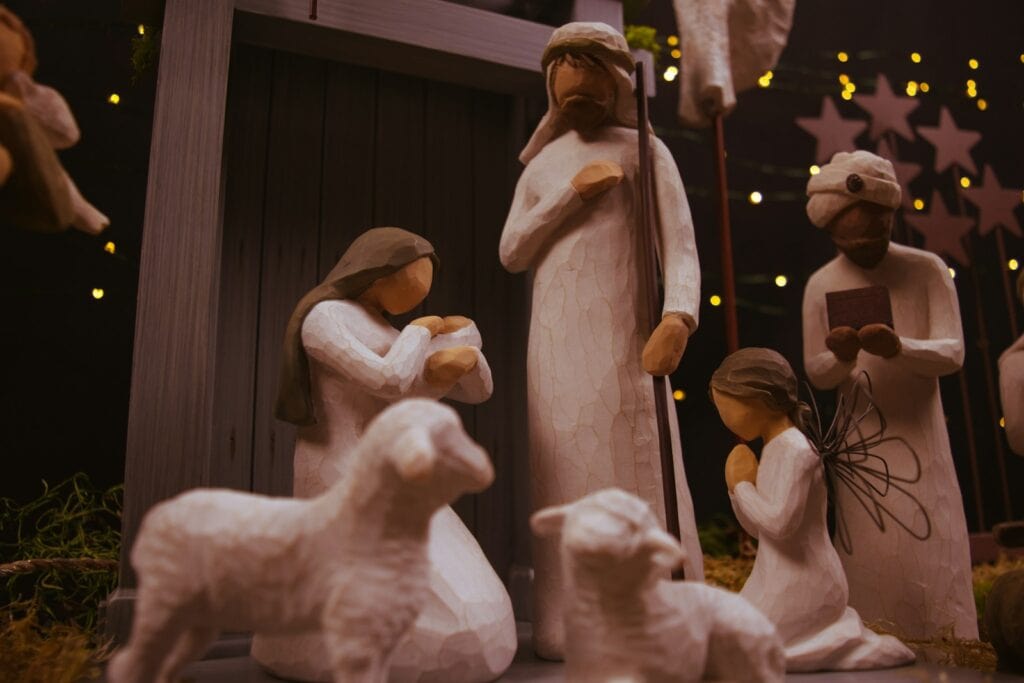
Let’s start with the real story. Christmas celebrates the moment God became human to rescue us. The Creator of the universe entered His own creation—not in power and glory, but as a helpless baby born to an unwed teenage mother in an occupied nation, with no room at the inn and a feeding trough for a bed.
The gospel accounts in Matthew and Luke proclaim the birth of Jesus in the city of David, fulfilling Old Testament prophecies and marking a pivotal moment in human history.
The angel announced to the shepherds, “I bring you good news of great joy that will be for all the people. Today in the city of David a Savior has been born to you; he is Christ the Lord.” This child, foretold in Isaiah 9:6 as the “Mighty God,” “Everlasting Father,” and “Prince of Peace,” is the sign that reminds all humanity of God’s great plan for the world.
Jesus’ birth is not only a historical event but the fulfillment of both Old and New Testament promises, revealing the hope, salvation, and eternal life offered to all. Conceived by the Holy Spirit, Jesus is the living Word who came to save us from sin, and His death and resurrection complete the story of redemption, bringing hope for the future and peace to a world filled with brokenness. The message of Christmas is universal—God’s love and salvation are for all people, and the impact of Jesus’ coming continues to shape the course of human history.
The first Christmas was messy. And that’s not an accident.
Jesus didn’t come into a perfect, Pinterest-worthy setting. He came into chaos, uncertainty, and imperfection. Which means He doesn’t expect you to create a perfect Christmas either. He came into imperfection because that’s exactly where we live.
Here’s what shifts when we really let this sink in: Peace isn’t something you manufacture. It’s someone you receive. When we say Jesus is the reason for the season, we’re remembering that He is the gift—not what we do, not how we perform, not whether our celebrations measure up.
Remember Martha from Luke 10? She was doing necessary work—hospitality mattered, and someone had to prepare the meal. But Jesus gently redirected her: “Martha, Martha, you are worried and upset about many things, but few things are needed—or indeed only one. Mary has chosen what is better” (Luke 10:41-42).
The preparations weren’t wrong. But they had become the main thing instead of Him.
What if all our doing is drowning out our being with Him?
I’ll be honest—I’ve had Christmases where I was so focused on making everything special that I barely prayed, rarely opened my Bible, and snapped at the people I was supposedly celebrating. The decorations were up, but my heart was distant. Maybe you’ve been there too?
Jesus invites us to something different: “Come to me, all you who are weary and burdened, and I will give you rest” (Matthew 11:28). That invitation doesn’t pause for December.
Small Shifts That Make Space for What Matters Most
This isn’t about adding more to your to-do list. It’s about making small, intentional choices that help you remember why we celebrate. You don’t have to do all of these—pick what feels doable for where you are right now. Grace meets you here.
- Set aside time for worship—whether through music, prayer, or quiet reflection—to intentionally honor and revere Jesus. Making worship a part of your Christmas season helps keep Jesus at the center and reminds you of His true significance.
Start Your Day With the Real Story
Before checking your phone or running through your mental task list, spend five minutes in the Gospels. Read one small section of Luke 1-2, Matthew 1-2, or passages from John such as John 1 or John 3:16 each morning through December. Ask yourself: What does this show me about who Jesus is?
This grounds you before the chaos starts.
Practical tip: Keep your Bible by the coffee maker, not your nightstand. Meet yourself where you actually are in the morning.
Create a “One Thing” Tradition
Identify ONE practice that intentionally points your heart (and your family, if you have one) to Jesus. Maybe it’s lighting advent candles with a simple prayer, reading the Christmas story aloud on Christmas Eve, or working through a short advent devotional at dinner.
By choosing one tradition and practicing it each year, you can establish a meaningful annual observance for your family that consistently reminds everyone that Jesus is the reason for the season. It doesn’t have to be elaborate. Consistency matters more than impressiveness. Give yourself permission to keep it simple.
Give Yourself Permission to Say No
Even Jesus withdrew from crowds to be alone with His Father (Luke 5:16). Every “yes” to something is a “no” to something else.
Before you commit, ask: Is this life-giving or obligation-driven? Will this help me focus on Jesus or distract from Him?
Practice this phrase: “That sounds lovely, but we’re keeping things simple this year.”
Saying no to good things isn’t wrong when it protects the best thing.
Pray Through Your Preparations
Turn your tasks into prayer prompts instead of resenting them.
Wrapping gifts? Pray for each person receiving them. Baking? Thank God for provision and the people you’ll share it with. Decorating? Ask God to be the true light of your home. Driving to events? Use the drive time to talk to Him honestly about how you’re feeling.
This redeems the busyness instead of fighting against it.
Remember the Gospel When You Fail
You will have moments of impatience. You will feel stressed and distracted. You will probably snap at someone you love.
Friend, that’s exactly why Jesus came—for imperfect people living imperfect lives. The gift of Christmas is grace, which covers your worst moments, not just your best ones.
His love for you doesn’t depend on how “Christ-centered” your Christmas feels.
Starting Over in the Middle of the Season
Maybe you’re reading this and thinking, It’s already halfway through December. I’ve already lost the plot.
The Christmas season is a time for new beginnings and spiritual reflection, even if things haven’t gone as planned so far.
Here’s the beautiful truth: It’s not too late. Christmas hasn’t passed yet. You can start today, right now, wherever you are.
Jesus met people in the middle of their mess all the time. The woman at the well was hiding from her community. Zacchaeus had climbed a tree just to catch a glimpse. The disciples were terrified in a storm. None of them had it together, and He came to them anyway.
That’s the beauty of grace—every moment is a new beginning.
Take ten minutes today. Just ten. Find a quiet corner, take a breath, and remember the real story: God loved you so much that He entered into your chaos to bring you home. That’s Christmas. That’s enough.
You don’t have to earn peace by doing Christmas perfectly. You receive peace by remembering the One who came for imperfect people like us.
So put down the pressure. Release the expectations—yours and everyone else’s. And let yourself simply be with the One who is the reason we celebrate at all.
He’s not waiting for you to get it together. He’s just waiting for you.
Praying for you, Katie
P.S. If you’ve been wanting to read the Bible consistently but feel overwhelmed by where to start, I’ve got something for you.
My 30-Day Bible Reading Plan and Journal gives you exactly what you need: guided daily readings, journaling prompts, reflection questions, and help for when you get stuck—all in one simple, grace-centered resource.
