

Bible Verses About Joy: Finding Real Joy in Holiday Chaos
You’re scrolling through Instagram, and everyone’s home looks like a Hallmark movie. Their kids are smiling in matching pajamas. Their cookies are perfectly decorated. And you? You’re behind on Christmas cards, your tree is half-decorated, you snapped at your husband this morning, and you feel guilty because you’re supposed to be joyful right now. It’s Christmas, after all—the season of peace and joy.
Or maybe you’re comparing something different—your spiritual life. Everyone else seems to have their faith figured out during the holidays. They’re posting about their consistent quiet times, their deep prayers, their peace in the season. And you’re just trying to survive December without losing your mind. Whether you’re single and feeling the loneliness amplified, building your adult life and feeling behind where you “should” be, or managing a household and drowning in expectations—the pressure to feel joyful is real.
So why do you feel more anxious than peaceful? More pressured than joyful? And why does it feel like you’re the only one struggling to keep it together when everyone else seems to have this holiday thing—and this faith thing—figured out?
If that’s where you are right now, I want you to take a breath. You’re not broken. You’re not less spiritual. And you’re definitely not alone. Let’s talk about what’s really going on—and more importantly, what Scripture actually says about finding true joy and peace when the “should be joyful” season feels anything but.
Why the Holidays Feel Harder When They’re “Supposed” to Be Easy
Here’s the thing nobody talks about: the pressure to be joyful can actually steal your joy.
Think about it. We’re surrounded by messages telling us this should be the most magical, wonderful, peace-filled time of year.
Church culture adds expectations of spiritual depth.
Social media shows us everyone’s highlight reel.
Family traditions carry the weight of “this is how we’ve always done it.”
And somewhere in the middle of all that, we start believing that if we’re struggling, something must be wrong with us. I call this the “should be joyful” trap. And it’s exhausting.
When we try to manufacture the “perfect” Christian Christmas, we actually move further from peace. We become more focused on the performance than the presence—more worried about what everyone will think than what we’re actually experiencing.
I remember one Christmas Eve when I was so stressed about getting everything “just right” that I completely missed the beauty of the moment. I was more focused on the perfect dinner settings and making the meal than the actual people at my table. And I felt like a failure—as a hostess, as a wife, and honestly, as a Christian.
Maybe you can relate.
For many of us, the holidays also bring up complicated things: family tension that surfaces at gatherings, financial stress that makes gift-giving painful, grief from loss that feels sharper during “happy” seasons, or loneliness that intensifies when everyone else seems surrounded by loved ones.
If you’re feeling this tension, you’re not failing at faith. You’re actually paying attention to what’s real instead of pretending everything is perfect. And that’s the first step toward finding actual peace.
What the Bible Actually Says About Joy
Here’s something that changed everything for me: biblical joy is not the same as happiness or manufactured cheerfulness.
From the very beginning of Scripture—both Old Testament and New Testament—we see that God’s plan for His people included joy and peace as foundational parts of our relationship with Him. When the Bible talks about joy, it’s describing something deeper—a deep sense of contentment rooted in God’s character, not our circumstances. This kind of joy can coexist with sadness, stress, and grief. It’s not about forcing a smile. It’s about anchoring yourself in Christ Jesus, who is bigger than your situation.
Let me show you what I mean. Here are some joy verses that completely changed how I understand what it means to experience joy:
Nehemiah 8:10 says, “The joy of the LORD is your strength.”

Here’s the context most people miss: when Nehemiah spoke these words, the people were actually weeping. They were grieving over their sin and failures. And Nehemiah told them not to grieve—not because their emotions were wrong, but because God’s presence with them was bigger than their failures. Your strength during chaos isn’t forced happiness; it’s anchoring yourself in who God is. Proverbs 17:22 connects to this truth: “A joyful heart is good medicine, but a crushed spirit dries up the bones.” Our emotional and spiritual state affects us deeply.
In John 16:33, Jesus said, “In this world you will have trouble. But take heart! I have overcome the world.”
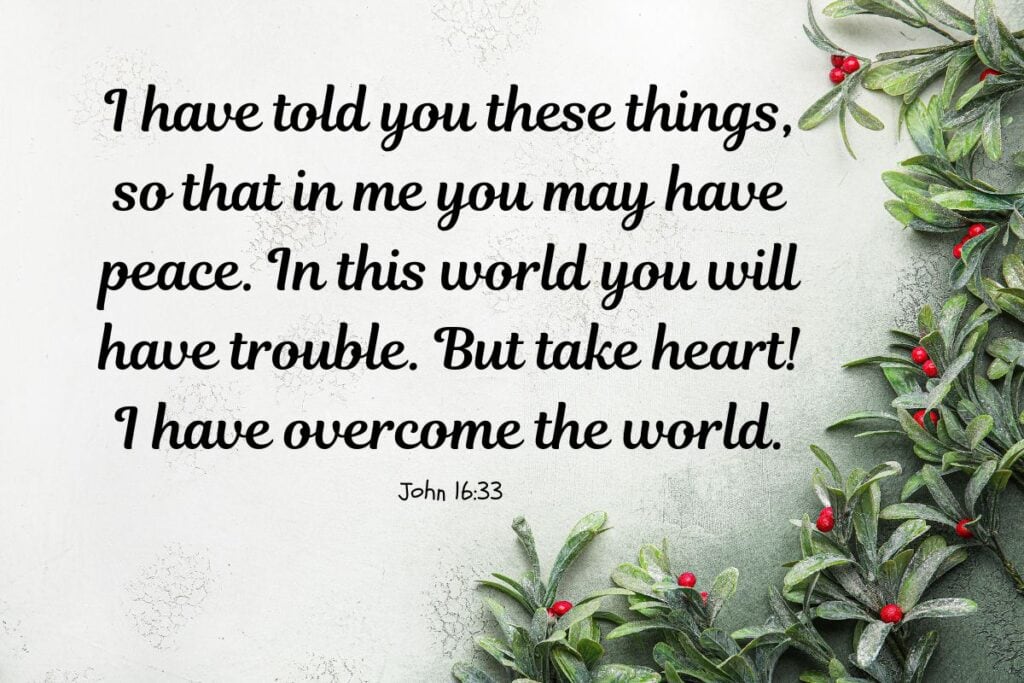
Did you catch that? Jesus promised trouble AND peace in the same sentence. He never expected us to pretend life isn’t hard. Real joy acknowledges difficulty while holding onto hope. The Lord Jesus Christ offers us something the world cannot—peace in the middle of the storm.
James 1:2-4 reminds us to “consider it pure joy whenever you face trials.”
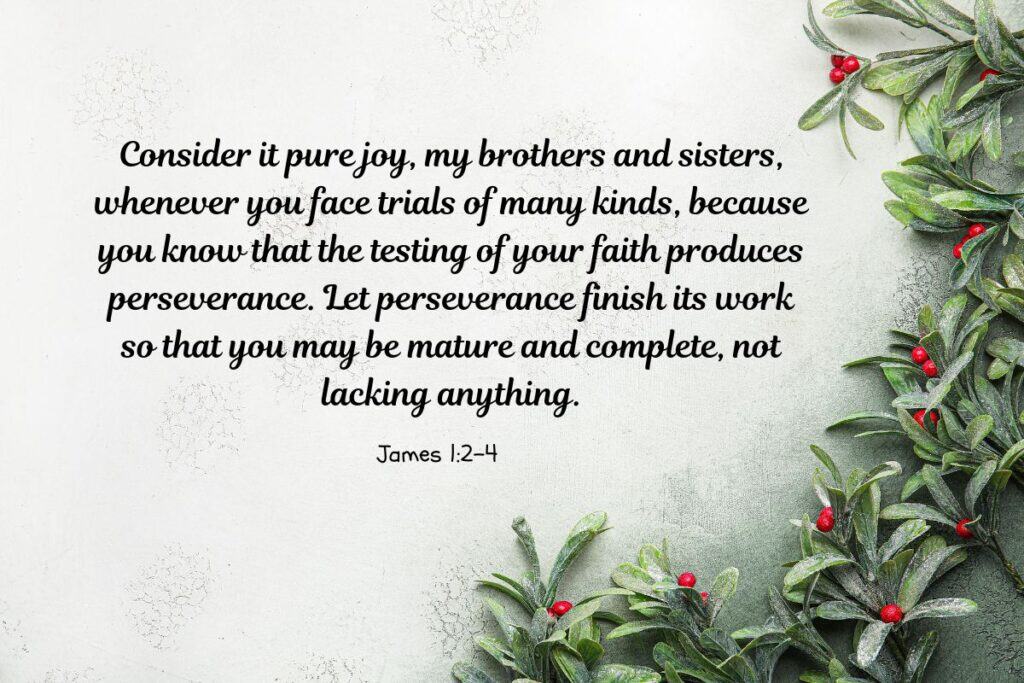
This isn’t “pretend to be happy when things are hard.” It’s “find purpose in the struggle.” When we meet trials, faith produces perseverance, and that perseverance leads to maturity and faithfulness. Joy grows through challenges, not despite them. The hard stuff is actually producing something in us.
Psalm 16:11 tells us, “In your presence there is fullness of joy; at your right hand are eternal pleasures forevermore.”
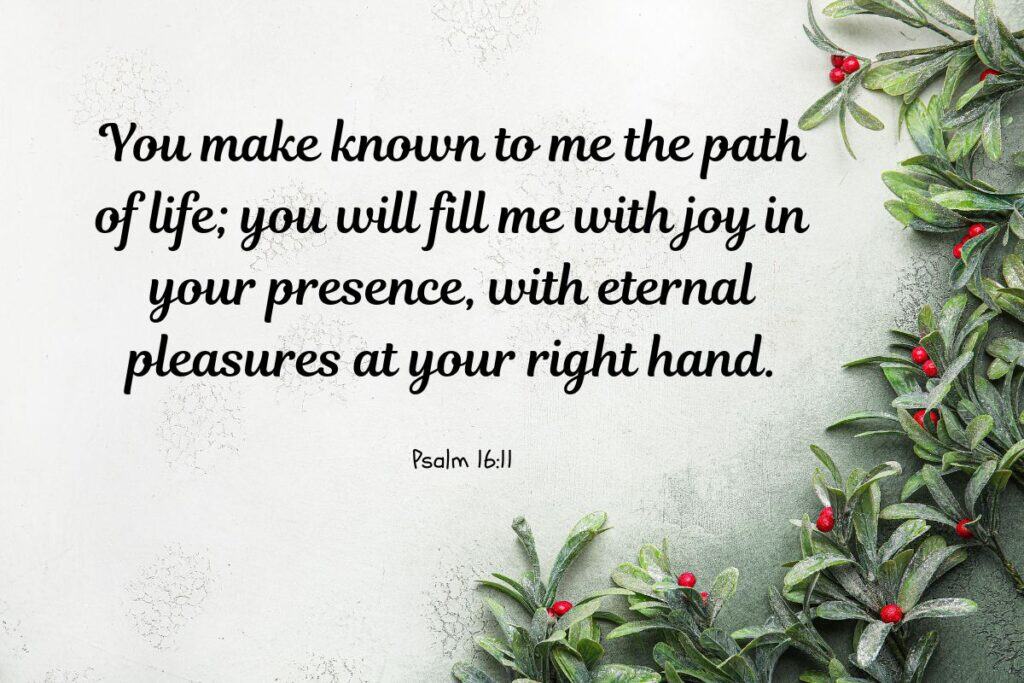
Joy is found in proximity to God, not perfect circumstances. Even in chaos, His presence is accessible. You don’t need a Pinterest-perfect Christmas morning to experience His peace.
And Philippians 4:4-7 says, “Rejoice in the Lord always… the peace of God will guard your hearts.”

Here’s what’s remarkable: Paul wrote this from prison. Not from a cozy living room with twinkling lights. From a jail cell. Rejoicing is a choice to remember God’s character—it’s not a feeling we have to manufacture.
1 Peter 1:8 speaks of “inexpressible and glorious joy” that comes from loving Jesus even though we haven’t seen Him. This is the kind of joy that transcends circumstances—a joy so deep it’s hard to even put into words.

These passages show us something revolutionary: God never expected you to fake happiness during hard seasons. He invites you to find something deeper—a peace that holds you even when everything feels chaotic.
More Bible Verses About Finding Joy
If you want to explore more of these favorite verses that have helped me, here are passages that remind us what God’s blessings look like even in hard seasons:
- Isaiah 35:10 – God promises His people everlasting joy and gladness
- Psalm 100:1-2 – “Make a joyful noise to the LORD, all the earth… come into his presence with singing”
- Galatians 5:22-23 – “The fruit of the Spirit is love, joy, peace, patience, kindness, goodness, faithfulness, gentleness, self control”—such things show us that joy comes from the Holy Spirit, not our circumstances
- Hebrews 12:1-2 – Jesus endured the cross for the joy set before Him—joy through suffering
- Psalm 30:5 – “Weeping may tarry for the night, but joy comes with the morning”—our pain lasts only a moment compared to God’s eternal faithfulness
- Matthew 13:44 – Jesus describes the kingdom of heaven like a treasure hidden in a field, worth giving up everything for
- Matthew 25:21 – The Lord calls us to be a faithful servant and says, “Enter into the joy of your master”
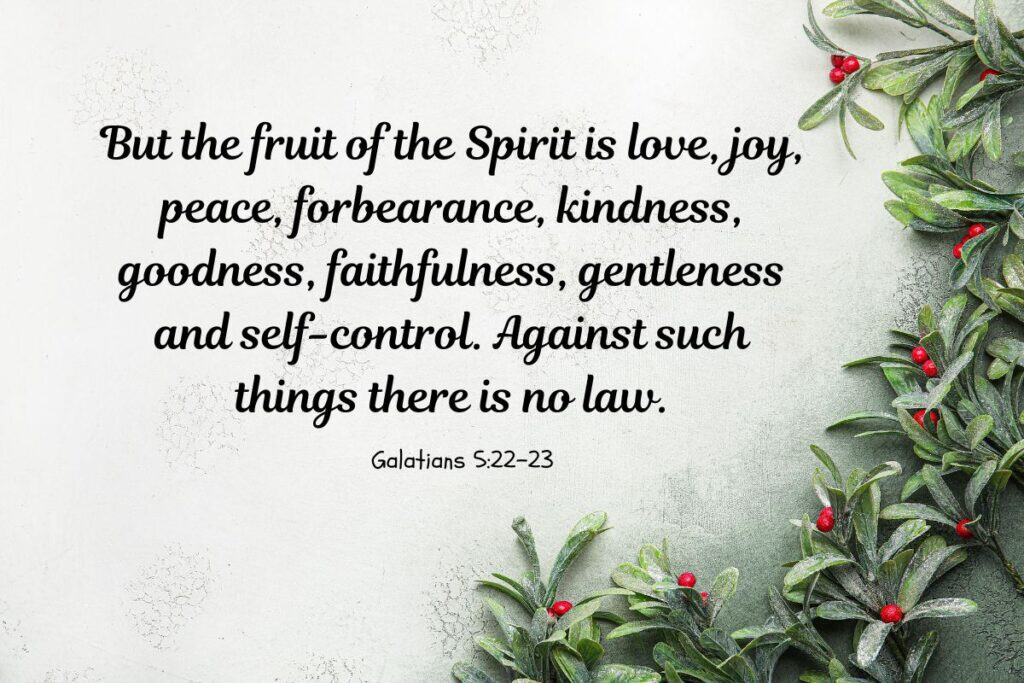


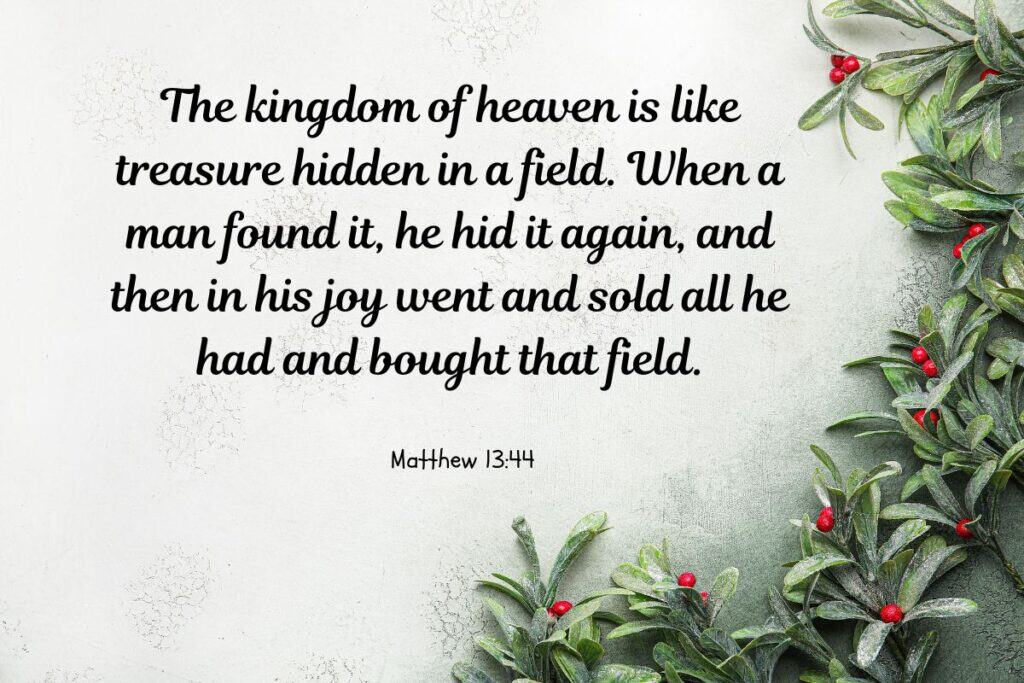

When we look at Scripture, we see that true joy isn’t about our circumstances being perfect. It’s about God filling us—hope fill our hearts because of who He is. The promise throughout both the Old Testament and New Testament is that God is with us, and His presence brings great joy even in everyday moments of our daily lives.
What “Finding Peace” Actually Looks Like This Week
Okay, so we know what joy actually is according to Scripture. But how do we find joy and actually experience it in everyday life when we’re drowning in to-do lists and family obligations?
Here are some practical, grace-filled ways to discover more joy this season—even in the middle of the chaos.
1. Name What You’re Actually Feeling
You have full permission to acknowledge anxiety, overwhelm, or sadness. God already knows what’s going on in your heart—you’re not surprising Him. Sometimes we feel like we have a crushed spirit, and that’s okay to name.
Try this simple prayer: “God, I’m feeling _____ right now, and I need Your peace.” That’s it. No fancy words required. Come with a willing spirit to receive what He offers.
2. Identify One Thing to Release
You don’t have to do everything. What tradition or obligation could you let go of this year?
Maybe this is the year you buy cookies instead of baking them. Maybe you send a simple family text instead of custom Christmas cards. Maybe you skip the matching pajamas and everyone wears whatever they want. Or maybe you say no to one gathering that’s been draining you for years.
You’re not behind. You’re prioritizing what actually matters.
3. Create Small Moments of Quiet with God
You don’t need a perfect quiet time to experience God’s peace. Here are some realistic options for everyday life joy:
- Five minutes with your coffee reading one Psalm
- Playing worship music while you wrap gifts—sing praise even if you don’t feel like it
- Praying while you drive to Target (again)
- Reading one passage on your phone while waiting in line
Start where you are.
4. Practice Presence Over Perfection
The people in your life need your presence, not your performance. What if the best gift you gave this year was actually being there—mentally, emotionally, spiritually—instead of stressed and distracted?
The goal isn’t a perfect Christmas. It’s connection.
5. Set Boundaries with Compassion
It’s okay to say no to some invitations. It’s okay to limit social media if it’s increasing comparison. It’s okay to leave family gatherings when you need to.
Here’s a script if you need it: “I’d love to, but I’m trying to keep our schedule simpler this year.”
6. Remember What You’re Actually Celebrating
The first Christmas was chaotic. Mary traveled while pregnant. There was no room at the inn. Jesus was born in a barn surrounded by animals. It was messy and imperfect and nothing like a Hallmark movie.
Jesus entered into our mess, not our perfection. You don’t have to create a perfect environment to honor His birth.
You don’t have to do all of these. Pick one. Start where you are. Progress, not perfection, friend.
Taking Care of Yourself So You Can Experience Peace
Let’s be honest: when life gets busy—especially during the holidays—self-care is often the first thing to go. It can feel selfish or even impossible to carve out time for yourself when there’s so much to do. But here’s the truth: you can’t experience God’s peace when you’re running on empty.
The Bible reminds us that “the joy of the Lord is your strength” (Nehemiah 8:10). But that strength doesn’t come from pushing yourself to the brink or ignoring your own needs. It comes from making space for God to fill you with His peace and presence. When the fruit of the Spirit includes peace, patience, kindness, goodness, faithfulness, gentleness, and self control, we see that taking care of ourselves is part of letting the Holy Spirit work in us.
Listen, taking a walk isn’t selfish—it’s actually creating space for God to meet you. Saying no to one more obligation isn’t lazy—it’s protecting your capacity to be present where it matters. Getting enough sleep, eating real food, taking five minutes alone in your car before you go inside—these aren’t luxuries. They’re how you make room for the Holy Spirit to work in your life instead of just white-knuckling your way through December.
Self-care doesn’t have to be complicated. Maybe it’s a walk outside where you can greatly rejoice in God’s creation—all the earth declares His glory. Maybe it’s a few minutes of prayer before your day starts. Maybe it’s listening to worship music instead of the news. Maybe it’s simply saying “no” to one more thing so you can breathe.
When you pause to rest and care for yourself, you’re not just recharging—you’re opening your heart to experience the joy and peace that only God can give. You’re making space to actually receive what He’s offering instead of being too exhausted to notice.
If You’re in a Genuinely Hard Season Right Now
I want to speak directly to some of you: maybe you’re not just stressed. Maybe you’re grieving, lonely, depressed, or in crisis.
Maybe this is your first Christmas after a loss. After divorce. After a job loss or health diagnosis. Maybe financial pressure makes holiday spending genuinely painful. Maybe family relationships are so strained that gatherings feel traumatic rather than festive.
I see you. And I want you to know: your holiday might look completely different this year, and that’s okay.
God’s peace isn’t dependent on your circumstances matching everyone else’s. You can honor where you actually are instead of pretending. Faith produces steadfastness—the ability to endure—and that steadfastness is built in seasons like this one.
So here’s your permission slip:
- It’s okay to opt out of traditions that hurt right now
- It’s okay to feel sad during a “happy” season
- It’s okay to need professional help—therapy, counseling, medical support
- It’s okay if your Christmas looks nothing like the ones on Instagram
- It’s okay to protect yourself, even if others don’t understand
Different isn’t deficient. Your path through this season is yours, and God meets you exactly where you are.
A Final Word of Grace
Friend, the peace you’re looking for isn’t hiding at the bottom of your to-do list. It’s not waiting for you on the other side of the perfect Christmas morning. It’s available right now, in the middle of the mess, because it comes from a Person—not a circumstance.
You don’t have to earn joy by being more put-together. You don’t have to manufacture peace by trying harder. You just have to receive what God is already offering: His presence with you, right here, right now.
So take a breath. Let go of what doesn’t matter. And remember: Let go of what doesn’t matter. Hold onto who does.
Praying for you,
Katie
